Same Coffee, Same Price: Why Is One Shop Busy and the Other Empty? Location Intelligence Explained
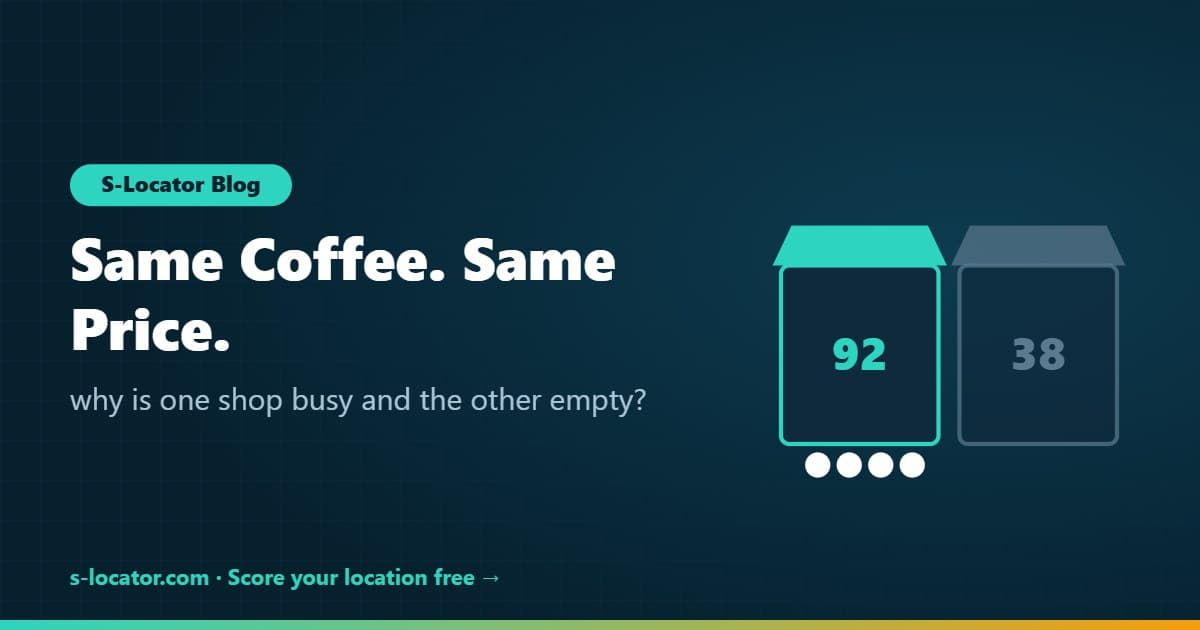
Picture two cafés with the same coffee, the same prices and similar décor. One has a queue all day; the other is nearly empty. The difference is almost always location. But what exactly makes a location "good"?
The hidden factors
1. Traffic direction: a café on the side people use on the morning commute performs very differently from one across the road.
2. Who lives and works nearby: families, offices and universities create different peaks and demand.
3. Purchasing power: if your prices exceed local spending, you depend on visitors from elsewhere.
4. The competitor map: five competitors on one street can mean saturation, or a destination area. Data tells the difference.
5. Access and parking: two extra minutes looking for parking is enough to send a customer to your competitor.
6. Invisible risks: zoning limits, upcoming roadworks or land-use changes can upend the numbers months after opening.
What is location intelligence?
It's the collection and analysis of geographic, demographic and commercial data to answer one question: where should I be? Decisions rest on measurable, comparable indicators instead of instinct or a quick drive-by.
How S-Locator works
S-Locator combines 50+ data points per location from verified government and private sources, including the General Authority for Statistics and the Real Estate General Authority. Then it:
• Scores the site 0–100 for your type of business
• Maps competitors within the catchment
• Flags risks such as zoning limits or poor access
• Compares multiple sites on the same criteria
• Recommends districts if you're still searching
As one retail owner put it: "For eight years, I spent three months searching for the location of every new shop. With S-Locator, I cut that effort down to fifteen minutes, with data I trust."
Conclusion
The gap between a busy shop and an empty one is rarely the product. It's in factors you can measure before you sign.
Try it now: Enter your address and get a free score.
FAQ
How is location intelligence different from a regular map? Maps show places; location intelligence evaluates them: who lives nearby, who competes with you, and how likely your business is to succeed.
Is location analysis useful for small businesses? Yes, even more so, because a wrong location can consume all of a small business's capital.
Where does the data come from? Verified government and private sources, plus first-party branch data for companies that choose to connect it.
Related articles
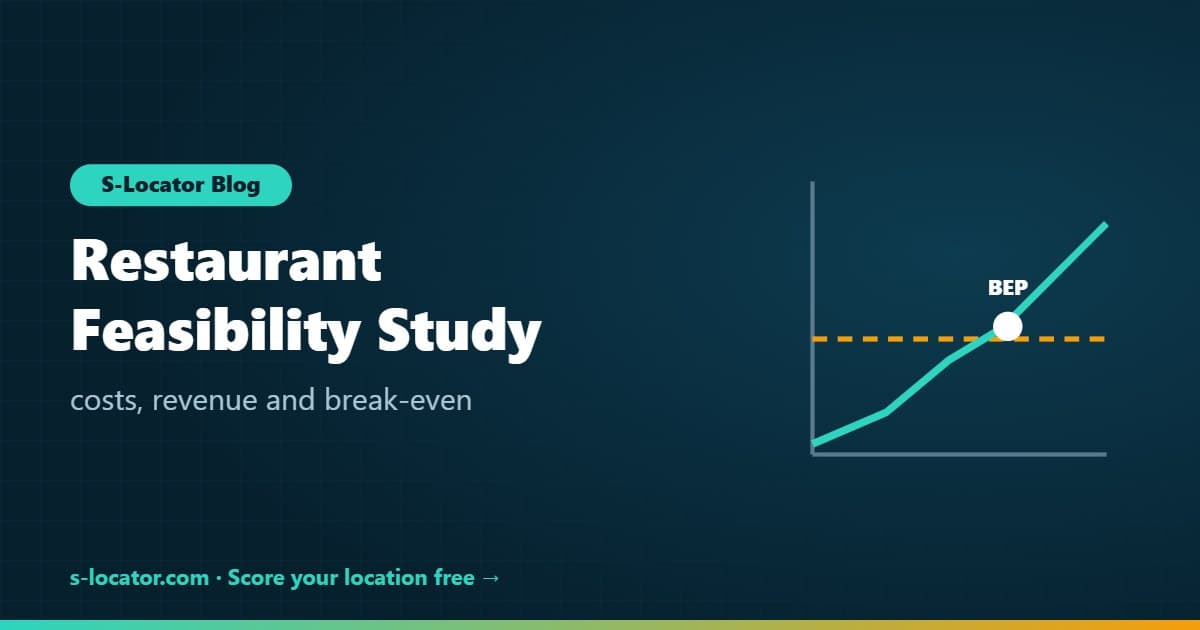
Restaurant Feasibility Study: A Practical Model for Costs, Revenue and Break-Even
How to build a restaurant feasibility study in Saudi Arabia: structure, revenue and break-even formulas, and why location data makes your forecast realistic.
How to Choose a Business Location: 8 Site Selection Criteria
Why location matters and 8 criteria for choosing the right business location in Saudi Arabia, plus how to measure each with data instead of guesswork.
Franchising in Saudi Arabia: How to Choose a Franchise Location
What is a franchise, and how do you choose a franchise location in Saudi Arabia? A guide for investors and brands on site evaluation, territories and data-led expansion.